ROWELL Drum Thrones, Trumpets & Band Accessories

ROWELL builds instruments and accessories for the full concert band lineup — from drum thrones and Bb trumpets to saxophone mouthpieces, clarinets, euphoniums, and trombone accessories. The catalog runs to over 30 SKUs across seven categories, with verified ratings from more than 600 Amazon buyers. Whether you're outfitting a first-year student or picking up an instrument you set down fifteen years ago, the specs are listed upfront so you know what you're getting before it ships.

✓ Exact specs listed✓ Full sets included✓ Drums to brass covered
Shop on Amazon
ROWELL Drum Throne Adjustable Drum Stool Lightweight Drum Seat Soft Drum Stools for Kids Widen Thick-Padded Electric Drum Kit Thrones Max Weight 330Lb Drum Set Stool for Adults Women Drummers(Blcak) ROWELL Bb Trumpet Brushed Finish Standard Brass Trumpet Set Professional B Flat Trumpets with Deluxe Hard Case
Specs Listed Where Others Just Say "Quality"

Every ROWELL product listing names exact measurements — seat thickness in centimeters, bore type, key count, weight capacity in pounds — rather than hiding behind vague claims about craftsmanship.

SGS and TUV Certified Hydraulic Mechanisms

The hydraulic drum throne line carries SGS and TUV safety certifications on the airlift column — the component that Reddit drummers consistently flag as the weakest point in budget hydraulic seats.

Full Sets Ship Ready to Play

Every trumpet, clarinet, and euphonium in the ROWELL catalog ships with a hard case, mouthpiece, and gloves — no separate accessory order required before the first practice session.

Rated Across Seven Instrument Categories

ROWELL holds the #1 position in Trombone Mutes on Amazon and ranks in the top 100 for drum stools, standard trumpets, and tenor saxophone mouthpieces — verified ratings across product lines, not a single standout.

Seven Categories, One Band Instrument Focus

ROWELL covers the full range of band and orchestra gear — drum thrones built for long rehearsals, Bb trumpets and clarinets for students and adult returners, saxophone mouthpieces split by style and voice, and trombone accessories from guard sets to mouthpieces. The lines don't share components, but they share the same principle: name the spec, back it with real materials, price it where serious students can actually afford it.

ROWELL Drum Throne

Drum Throne

Five throne options — round padded, motorcycle-style wide seat, and hydraulic with or without backrest — spanning 17 to 38.2 inches of height adjustment and up to 420 pounds of weight capacity.

ROWELL Trumpet

Trumpet

Four Bb trumpet sets in brushed gold, pink, student gold, and nickel black finishes — all with stainless steel pistons, large bore design, and a 7C mouthpiece included from the box.

ROWELL Euphonium

Euphonium

Bb euphoniums and a baritone horn for intermediate players stepping into low brass — solid brass bodies, stainless steel pistons, and hand-polished finishes on the 4-valve lacquer gold model.

ROWELL Clarinet

Clarinet

Three Bb clarinets split by body material: an ABS composite 17-key for temperature-stable student use, and African blackwood models in 17-key and 18-key with Eb/Ab lever for advancing players.

ROWELL Saxophone Mouthpiece

Saxophone Mouthpiece

Eight mouthpieces organized by playing style and voice — classic and jazz variants across alto, tenor, and soprano saxophones, including metal mouthpieces with 5-level adjustable ligatures for jazz players.

ROWELL Brass Instrument Accessory

Brass Instrument Accessory

Practice mutes, replacement mouthpieces, and leather valve guards for trumpet, French horn, and tuba — the items that protect what you've already bought and fill gaps in a stock setup.

ROWELL Trombone Accessory

Trombone Accessory

ABS practice mutes, a 51D and a 12C mouthpiece for large and small bore trombones respectively, and a three-piece leather guard set with a 6.85-inch neck pad for sweat protection.

Browse all categories

Browse the complete brand catalog with up-to-date pricing on Amazon.

12 ROWELL Products Buyers Come Back For

These twelve span every category in the lineup and represent the products where buyer reviews have accumulated enough to tell a real story — from the round padded throne with 174 verified ratings to the leather trombone guard set that gigging players and band parents keep reordering. They're not the cheapest options or the flashiest; they're the ones where the spec matches the use case clearly enough that buyers aren't returning them.

ROWELL Drum Throne Heavy Duty Drum Throne Seat Air Guide Hole Drum Stool Motorcycle Style Thrones Height Adjustable Drum Chair for Adult
drum throne

Motorcycle Throne Wide Seat Blue

See on Amazon
ROWELL Bb Standard Trumpet Professional Brass Trumpets for Beginner Standard Student Trumpet Set with Hard Case
trumpet

Standard Bb Trumpet Pink

See on Amazon
ROWELL Euphonium 4 Valves Bb Brass Lacquer Gold 4 Stainless Steel Pistons Intermediate Advanced Euphonium with Case Gloves and Polishing Cloth
euphonium

4-Valve Euphonium Lacquer Gold

See on Amazon
ROWELL Maple Bassoon C Key Professional Bassoon with Self-Locking Mechanism 26 Keys Silver Plated Bassoons Instrument with Case
bassoon

Maple Bassoon C Key Red

See on Amazon
ROWELL 17 Key Bb Clarinet with African Blackwood Body & Italian Pads Professional Rich Tone for Beginner & Intermediate Students Includes Case
clarinet

Blackwood Clarinet 17 Key

See on Amazon
ROWELL Jazz Tenor Saxophone Mouthpiece Professional Sax Mouthpiece Warm & Full Tone for Students & Pros
saxophone mouthpiece

Jazz Tenor Sax Mouthpiece

See on Amazon
ROWELL Professional Baritone Horn 3 Valves Baritone Horn -Yellow Brass Body with Gold Lacquer Finish Stainless Steel Pistons– Bb Brass Instrument for Concert Bands & Advanced Players
baritone horn

3-Valve Baritone Horn Gold

See on Amazon
ROWELL Trumpet Mute
brass instrument accessory

Straight Trumpet Mute Silver

See on Amazon
ROWELL Single French Horn 3 Keys Gold Lacquer F Horn with Case
french horn

Single French Horn F Key

See on Amazon
ROWELL Trombone Mute ABS Trombone Mutes Silencer Lightweight Black Trombone Mute Trombone Mutes with High Density Sponge Interface
trombone accessory

ABS Trombone Mute Black

See on Amazon
ROWELL Violin Stand Violin Stands with Bow Holder Foldable Portable Viola Stand Height Adjustable Violin Stand with Head Protection Lock &Anti-slip Foot Covers (Black)
violin stand and hanger

Foldable Violin Stand Bow Holder

See on Amazon
ROWELL Flute Bag and Case Set 600D Nylon Exterior and Leatherette-Wrapped Paulownia Wood Box with Supportive PVC Board Sponge Interior Ergonomic Strap for 16/17 Key Flute Travel and Performance
flute bag and case

Flute Bag and Case Set

See on Amazon
drum throne

5 ROWELL Thrones for Every Playing Situation

ROWELL's drum throne line covers three distinct designs — round padded, motorcycle-style wide seat, and hydraulic — with weight capacities ranging from 330 to 420 pounds and height ranges from 17 inches up to 38.2 inches. The round throne uses 8 cm high-density sponge on an 11.8-inch seat with four straight legs; the motorcycle-style opens to a 16.7-inch wide seat with an air guide hole that prevents heat buildup during long sessions. Both hydraulic models carry SGS and TUV certification on the airlift column, and both use a four-leg base rather than the tripod design that drummers on r/drums consistently flag for lateral instability.

What to look for

  • Seat style — round padded for classic posture, motorcycle/saddle for players who prefer a wider perch that fits the body's natural curve at the kit
  • Height range — the standard round throne adjusts 17–21.7 inches; the motorcycle-style goes 19.7–26.4 inches; the hydraulic with backrest reaches 31.1–36.6 inches for taller players or those who sit unusually high
  • Weight capacity — 330 lbs on the standard round and hydraulic-no-backrest models, 350 lbs on the motorcycle-style, 420 lbs on the hydraulic-with-backrest flagship
  • Mechanism type — swivel spin-lock on the round and motorcycle models; hydraulic airlift on both hexagonal-seat options (faster height adjustment, but evaluate whether bounce matters for your playing style)
  • Portability — the round throne's straight-leg design folds smallest; the motorcycle-style zinc alloy base is heavier at nearly 16 pounds but more stable on hard stage floors

In this category

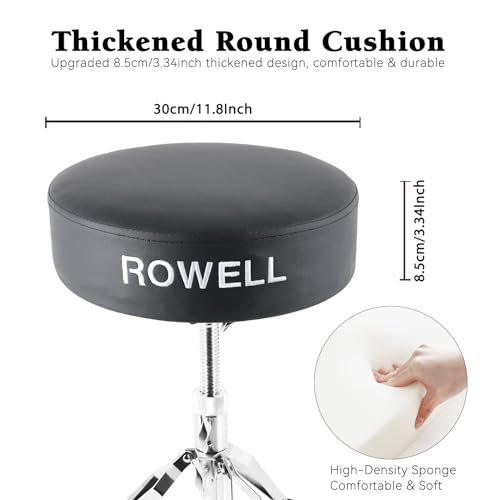
  • Round Padded Throne Standard — The most reviewed ROWELL throne (174 ratings) — 8 cm high-density sponge, 11.8-inch seat, four straight legs, 330 lb capacity, and a height range of 17–21.7 inches that fits most adult drummers sitting at standard kit height.
  • Motorcycle Throne Wide Seat Blue — The 16.7-inch wide seat and built-in air guide hole make this the better choice for drummers who sit for two-hour rehearsals and don't want heat buildup — the zinc alloy triangular base holds up to 350 lbs.
  • Motorcycle Throne Wide Seat Black — Identical specs to the blue version (16.7-inch seat, 350 lb capacity, 19.7–26.4 inch height range) for players who want the same wide-seat design without the textured blue finish.
  • Hydraulic Throne Backrest 4-Leg — The flagship: SGS/TUV-certified hydraulic airlift adjusts 31.1–36.6 inches, velvet hexagonal seat, adjustable backrest, 420 lb capacity, and a four-leg base that outperforms tripod hydraulics for lateral stability.
  • Hydraulic Throne No Backrest — The hydraulic option for players who don't want a backrest — same four-leg SGS/TUV-certified airlift design, 3.9-inch foam, but a lower height range of 17.7–24 inches and 330 lb capacity. Rated 3.7 stars with 9 reviews — the lowest-rated throne in the line.

Which ROWELL Throne Fits Your Setup

The short answer: round padded thrones work for most players, motorcycle-style seats suit longer sessions and heavier builds, and hydraulic thrones make sense when you need fast height adjustment between players or want backrest support during extended practice. The differences aren't just cosmetic — seat shape, height range, and base design each affect how you feel after two hours of playing.

Round Padded Throne — Standard Sessions, Smaller Footprint

The Round Padded Drum Throne (B0CJ4NNQN3) is the most reviewed throne in the ROWELL line at 174 verified ratings, which tells you something about who actually buys it: everyone from kids in first-year band to adult players who want a reliable seat without overthinking it. The 11.8-inch seat surface with 8 cm of high-density sponge holds its shape through a normal rehearsal. Height adjusts from 17 to 21.7 inches via two wing-shaped knobs — no tools, no drama. Weight capacity is 330 pounds.

Honestly, for a player who sits at the same kit in the same room most of the time, this is the throne to start with. The four straight legs stay planted on hard floors better than tripod bases, and the removable seat means you can swap it if you ever want to upgrade just that piece. It's not a throne for a 6-foot-4 drummer — the 21.7-inch max height will feel low for tall players. But for average-height adults and younger students, the range is right.

ROWELL Drum Throne Adjustable Drum Stool Lightweight Drum Seat Soft Drum Stools for Kids Widen Thick-Padded Electric Drum Kit

Motorcycle Style — Wide Seat, Spinal Pressure Relief

The Motorcycle Style Drum Thrones (B0CJ4MV2RL in blue, B0CJ4MFFJY in black) solve a specific problem: drummers who feel lower-back compression after long sessions. The saddle-style 16.7-inch seat — nearly 5 inches wider than the round model — spreads pressure across the hips rather than concentrating it on the sit bones. The air guide hole in the seat surface adds ventilation during high-intensity playing, which matters more than it sounds when you're 90 minutes into a rehearsal.

Height range is 19.7 to 26.4 inches, which opens this throne up to taller players the standard model can't accommodate. Weight capacity bumps to 350 pounds. The zinc alloy triangular leg base locks solidly, and the 360-degree rotation lets you angle the seat without repositioning the whole throne. One note: the triangular base design has somewhat less floor contact than the four-leg straight design on the round model, so on very slick floors you may want to check that the rubber feet are seated properly before a set.

Hydraulic Thrones — Height on Demand, Backrest Option

Two hydraulic models exist in the ROWELL line, and they serve different players. The Hydraulic Drum Throne with Backrest (B0FHH51649) is the flagship: 4-leg base, hexagonal velvet seat, adjustable backrest, 31.1 to 36.6 inches of height range, and a 420-pound weight capacity. It carries SGS and TUV certification on the airlift mechanism, which addresses the most common concern about hydraulic thrones — whether the hydraulic column will hold steady or slowly sink under playing pressure.

The four-leg base here matters. Reddit's drumming community has documented repeatedly that tripod hydraulic thrones have more lateral flex than players want, especially during heavy hitting. Four legs distribute that load more evenly. That said, hydraulic thrones do have more mechanical "give" than a standard spin-lock column — it's not wobble, but it's not as rigid as a threaded spindle either. If you play with an extremely grounded, stationary technique and hate any seat movement, a non-hydraulic throne may feel more solid. For most players, especially those sharing a kit with people of different heights, the hydraulic adjustment — which takes seconds rather than a spin-and-lock sequence — is worth the trade-off.

The Hydraulic Drum Throne No Backrest (B0F9FBCWZ2) has the same four-leg hydraulic base and SGS/TUV certification, with a lower height range of 17.7 to 24 inches and a 3.9-inch thick foam hexagonal seat. At 3.7 stars from 9 reviews, it's the lowest-rated throne in the line — not because of a critical flaw, but because the backrest model exists at a comparable size and the backrest is genuinely useful for long sessions. If you want the hydraulic mechanism without the backrest and at a lower height range, this is the option — but most players who want a hydraulic throne end up preferring the backrest model when they compare them side by side.

Quick Reference by Player Type

  • Student or average-height adult, stationary setup: Round Padded Throne (B0CJ4NNQN3) — 17–21.7 inches, 330 lb, 11.8-inch seat
  • Player with lower-back sensitivity or heavier build: Motorcycle Style (B0CJ4MV2RL or B0CJ4MFFJY) — 19.7–26.4 inches, 350 lb, 16.7-inch saddle seat
  • Tall player or shared kit with multiple height players: Either motorcycle style or the hydraulic models, depending on whether you need backrest support
  • Extended rehearsals, backrest support, or frequent height changes: Hydraulic Throne with Backrest (B0FHH51649) — 31.1–36.6 inches, 420 lb, SGS/TUV certified
  • Hydraulic without backrest: B0F9FBCWZ2 — 17.7–24 inches, 330 lb — check current ratings and reviews before choosing over the backrest model
trumpet

ROWELL Bb Trumpets Built for Student Reality

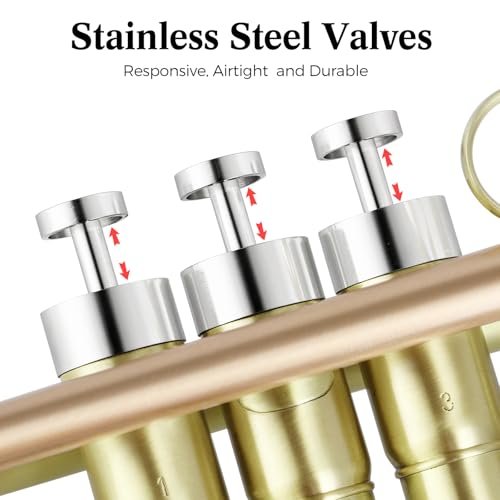
All four ROWELL Bb trumpets share the same core construction: solid brass body, stainless steel piston valves with rapid rebound, large bore design for a clear and projecting tone, double drain valves to slow moisture buildup, and a 7C mouthpiece included in every set. The primary difference between models is finish and included accessories — the brushed gold and nickel black variants come with a trumpet stand in addition to the hard case and gloves, while the pink and student gold models ship with case, mouthpiece, and gloves. None of these is a professional horn, but the stainless pistons and real brass construction separate them from the cheapest Amazon-channel instruments that use lesser alloys and softer valve materials.

What to look for

  • Finish durability — brushed finish on the gold flagship resists fingerprints and requires less polishing than lacquer; nickel black engraving is striking but requires more careful handling
  • Included accessories — confirm whether the set you're choosing includes a stand, since not all four models do (brushed gold and nickel black include stands; verify the pink and student gold listings before ordering)
  • Mouthpiece — every ROWELL trumpet ships with a 7C, the standard beginner size; if you're returning to the instrument after years away, this is the right starting point before exploring wider options
  • Bore size — all four models use a large bore design, which produces a brighter, more projecting tone and requires slightly more air support than medium bore instruments; factor this in if you're buying for a very young beginner

In this category

  • Brushed Finish Bb Trumpet Gold — The brushed matte finish resists fingerprints and scratches better than standard lacquer, the rose brass leadpipe adds warmth to the tone, and the integrated blowpipe design promotes even resonance across registers — the most complete set in the line.
  • Standard Bb Trumpet Pink — Same stainless pistons and large bore as the rest of the line in a pink lacquer finish; 4.4 stars across 46 reviews makes it one of the two highest-rated models in the trumpet category.
  • Student Bb Trumpet Gold — Precision intonation design, dual drain valves, and a classic gold finish — ships with case, stand, 7C mouthpiece, and gloves; 4.4 stars across 46 reviews alongside the pink model.
  • Nickel Black Bb Trumpet — The highest-rated trumpet in the ROWELL line at 4.8 stars (11 reviews); the nickel-plated black engraving finish is visually distinctive, and the one-piece blowpipe design supports even body resonance across the full register.

What Every ROWELL Trumpet Owner Needs First

Every ROWELL trumpet set ships with the instruments you need to start playing immediately: a hard case, white gloves, and a silver-plated 7C mouthpiece. Most models also include a trumpet stand. But knowing what you actually have — and when it stops being enough — will save you from both unnecessary purchases and avoidable frustration in the first six months.

What's Included and What It Means

The 7C mouthpiece included with ROWELL Bb trumpets is the industry-standard starting point for a reason. Its moderate cup depth and medium-sized throat produce an even tone across the range without demanding excessive embouchure control from a developing player. If you're returning to trumpet after years away, the 7C is still the right place to restart — it's familiar, it's balanced, and it won't fight you. The silver-plated surface on ROWELL's 7C mouthpiece (also sold separately as B0DLN64XYT, with a 3.54-inch height, 0.4-inch insert diameter, and 1.06-inch outer diameter) is a real finish, not a coating that wears off in a month.

The hard case matters more than people give it credit for. Trumpets stored in soft gig bags collect dust in the valves and get knocked around in car trunks. The flannel-lined hard case included with the Brushed Finish Bb Trumpet (B08C9FHKW7) protects both the finish and the bell from impact. Don't leave the trumpet in the case without swabbing the mouthpiece — moisture sits in the leadpipe and accelerates corrosion inside the tubing.

What You'll Actually Need to Buy

Valve oil. This isn't optional — it's the single most important ongoing maintenance item for any piston-valve trumpet. ROWELL's stainless steel pistons are designed for fast, responsive action, but they need regular lubrication to stay that way. Any standard trumpet valve oil works; Blue Juice and Al Cass are two commonly available options. Apply a few drops to each valve every few days of regular practice.

ROWELL Bb Trumpet Brushed Finish Standard Brass Trumpet Set Professional B Flat Trumpets with Deluxe Hard Case

Within the first three months, most developing players also benefit from adding a slide grease for the tuning slide and a small bottle of bore oil applied sparingly to the leadpipe. These aren't expensive, and skipping them leads to stuck slides — a common and avoidable repair issue on student instruments.

When the 7C Mouthpiece Isn't Enough

Honestly, most beginners don't need to think about mouthpiece upgrades for the first six months. The 7C handles fundamentals well. The situation changes when a player develops a consistent embouchure, starts working on high-register work above a written G above the staff, or moves into jazz playing where brighter, more projecting tone matters. At that point, a dedicated mouthpiece exploration makes sense — smaller cup depth for higher-register facility, larger or more open designs for jazz lead playing. ROWELL sells the 7C as a standalone piece (B0DLN64XYT), so replacement is straightforward if the included piece gets lost or damaged.

Using a Practice Mute in the First Year

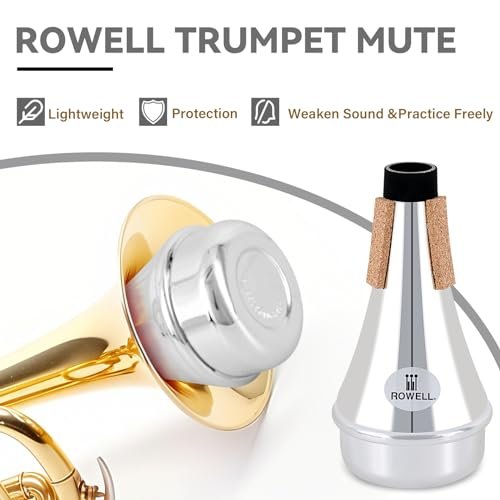
A practice mute is genuinely useful for apartment players and anyone practicing in shared spaces. ROWELL's ABS Straight Trumpet Mute (available in silver, B0CG8QYG1P, or black, B0CG8L7VQN) reduces playing volume by 30–40%. That's meaningful — neighbors two rooms away will notice the difference. But there's one thing every new mute user needs to know: straight mutes sharpen the instrument's intonation, typically by pushing the tuning sharp. The fix is simple: push your tuning slide in slightly when you put the mute on, then pull it back when you remove it. If you don't compensate, you'll internalize sharp pitch habits during mute practice, which then creep into your unmuted playing.

The three cork strips on ROWELL's mute create three airflow channels rather than sealing the bell completely — this maintains some tone quality while still reducing volume. It's not silent, and it won't make a trumpet apartment-quiet the way an electronic practice mute would. But for a player who needs to practice for 45 minutes without bothering the household, it does the job.

Six-Month Checkpoint

  • Day one essentials: Valve oil (not included — buy immediately), the case, the 7C mouthpiece
  • First month: Add slide grease and bore oil for maintenance
  • Months 1–3: A practice mute if you're in a shared living space
  • Months 3–6: Evaluate whether the 7C still serves you — most players are fine; players advancing into specific styles may want to explore alternatives
  • Not needed yet: A second trumpet, a cup mute, a harmon mute, or any other specialized mute type — those serve specific performance contexts, not general practice
clarinet

ABS or Blackwood — 3 ROWELL Clarinets Compared

ROWELL's clarinet line splits across two body materials and two key configurations. The ABS composite model uses a complex bore design with 17 silver-plated two-tone keys and a needle spring mechanism — practical, temperature-stable, and suited for students who store instruments in cars and lockers. Both African blackwood models use the same dense East African hardwood body with Italian sheepskin pads and dual tuning tubes; the difference between them is the key count — 17 keys on the standard blackwood model, 18 keys with a dedicated Eb/Ab lever on the advanced model. All three are Bb clarinets and all three ship with a hard case and mouthpiece.

What to look for

  • Body material — ABS composite is temperature-stable and won't crack in cold or dry conditions; African blackwood produces a different resonance quality and is the material used on professional instruments, but it requires more careful storage
  • Key count — 17 keys covers standard concert band repertoire; the 18th key (Eb/Ab lever) matters for advancing players tackling chromatic passages and more complex repertoire, but is unnecessary for beginners
  • Pad material — the ABS model uses standard pads; both blackwood models use Italian sheepskin pads, which provide better airtightness and a more responsive key feel
  • What's included — the ABS model ships with case, mouthpiece, and gloves; the blackwood models add reeds and cork resin to the package, which saves an extra purchase before the first lesson

In this category

  • Blackwood Clarinet 17 Key — East African blackwood body with Italian sheepskin pads, 17 silver-plated keys, and dual tuning tubes — the step-up material choice for students who've outgrown resin instruments and want the tonal depth that wood provides.
  • ABS Clarinet 17 Key Standard — Complex bore ABS composite body, 17 silver-plated two-tone keys, needle spring mechanism — the practical starting point for new students that won't crack if left in a cold car or a dry practice room.
  • Blackwood Clarinet 18 Key Eb/Ab — The 18-key system with dedicated Eb/Ab lever gives advancing players more fingering flexibility across the full chromatic range — built on the same African blackwood body and Italian sheepskin pads as the 17-key blackwood model.

ABS vs African Blackwood in Student Clarinets

ROWELL 17 Key Bb Clarinet with African Blackwood Body & Italian Pads Professional Rich Tone for Beginner & Intermediate Stude

African blackwood produces a richer, more resonant tone than ABS composite — that's real and measurable. But for most students in their first two years of playing, the difference is substantially smaller than online forums make it sound, and the practical advantages of ABS in a student context are worth understanding before deciding which ROWELL clarinet to buy.

What ABS Actually Does Well

ABS — acrylonitrile butadiene styrene, the same material used in high-quality luggage — is dimensionally stable in ways that wood isn't. A wooden clarinet left in a cold car trunk in January can develop hairline cracks as the wood contracts. Stored in a dry environment without proper oiling, wooden clarinets crack along the grain. ABS doesn't do any of this. For a student who is still learning instrument care habits, or whose clarinet will travel in a school bag across variable temperatures, that crack-resistance matters.

The ROWELL ABS 17-Key Bb Clarinet (B0BS965CB2) uses a complex bore design rather than a simple cylindrical bore. That distinction is worth noting: the complex bore shape is engineered to improve intonation consistency across the register break — the acoustic jump between lower and upper register that trips up every clarinet student. The 17 silver-plated two-tone keys use a needle spring mechanism for quick, elastic return. You get the case, mouthpiece, and gloves included, but no reeds in the box — budget for a box of strength 2.5 or 3 reeds before the first lesson.

What Wood Actually Does Better

African blackwood — sometimes called mpingo, and related to but not identical with grenadilla — is dense enough that it reflects sound differently than ABS. The result is a tone with more depth and what players describe as "core": a centered quality that carries in ensemble playing. This isn't audiophile-level mysticism. It's measurable acoustic behavior based on the material's density and cellular structure.

That said, the difference becomes audible in meaningful ways as players advance past the beginner stage. A first-year student producing inconsistent tone, still building embouchure strength, and navigating the register break is not going to hear the difference between their ABS clarinet and a wood instrument — their playing limitations are the acoustic ceiling, not the instrument's material. A student in year two or three, producing consistent tone and working on refinement, will start to notice.

ROWELL's Three Clarinet Models

The 17-Key ABS Bb Clarinet (B0BS965CB2) is the entry point. It suits a first-year band student, a casual adult player who wants to learn without a significant investment, or anyone whose instrument will face unpredictable storage conditions. The dual tuning tube system — two barrel lengths for temperature compensation — is a feature you don't always find at this level, and it helps with intonation stability as room temperature shifts.

The 17-Key African Blackwood Bb Clarinet (B0FK4YJZQ5) steps up in body material while keeping the same key count. East African blackwood body, Italian sheepskin pads rather than synthetic, dual tuning tubes, and the kit includes cork resin and a reed — genuinely more complete than the ABS set. This is the right choice for a student who has confirmed they'll stick with clarinet past the first year and wants an instrument that will serve them through middle and high school without sounding like a compromise. Italian sheepskin pads provide better airtightness than many student-tier synthetic pads, which means fewer air leaks around the tone holes — and air leaks are one of the most common causes of intonation and response problems on student clarinets.

The 18-Key African Blackwood Bb Clarinet with Eb/Ab Lever (B0FK4ZVQJX) adds one key: the Eb/Ab lever, which improves left-hand fingering efficiency for passages that cross between registers. It's a feature found on intermediate and professional instruments; its absence isn't a problem for most beginning-to-intermediate students, but its presence makes technical passages in flat keys substantially easier. This model suits a player who has already been playing for one to two years, is working on more demanding repertoire, and wants the instrument to stay relevant through high school and possibly into college.

The Honest Summary

Buy the ABS model if: the student is brand new to clarinet, the instrument will face temperature variation or storage stress, or the budget is a genuine constraint. Buy the 17-key blackwood model if: the student has confirmed their commitment and you want an instrument that will last without a material upgrade. Buy the 18-key blackwood model if: the player is already intermediate and working on technical facility — the Eb/Ab lever is not a gimmick, it's a real ergonomic improvement for specific fingering patterns.

And one note on the r/Clarinet community's strong stance against ABS clarinets: they're not wrong that wood is generally superior. But "clarinet-shaped object" is a description for the cheapest no-name ABS instruments with poor keywork, leaky pads, and no bore engineering. The ROWELL ABS clarinet uses a complex bore and needle spring mechanism — it's not in that category. A student can learn properly on it.

saxophone mouthpiece

8 Sax Mouthpieces Split by Style and Voice

ROWELL's saxophone mouthpiece line runs across two axes simultaneously: playing style (classic vs. jazz) and instrument voice (alto, tenor, and soprano). The classic models — MC1.52-01 for alto, MC2.1-01 for tenor, MC1.06-01 for soprano — produce warm, focused, controlled tones suited to concert band and chamber settings. The jazz models — MJ2.05-01 for alto, MJ2.18-01 for tenor, MJ1.47-01 for soprano — are tuned for brighter, fuller, more responsive output suited to jazz, R&B, and funk contexts. Two metal mouthpieces with 5-level adjustable ligatures round out the line for players who need more tonal control over reed response without buying a separate ligature.

What to look for

  • Style axis first — decide classic or jazz before worrying about model number; the chamber shape and facing curve differ significantly between the two, and the wrong choice for your ensemble context will make intonation work harder
  • Voice match — confirm your instrument (alto, tenor, or soprano) before ordering; these mouthpieces are not cross-compatible between voice types
  • Soprano reed compatibility — if ordering the Classic Soprano Sax Mouthpiece (MC1.06-01), verify that your soprano reeds fit the table width before purchasing; some players have reported reed fit issues with this specific model
  • Ligature type — the standard models include a fixed ligature; the metal mouthpieces include a 5-level adjustable ligature that lets you fine-tune reed vibration and response without swapping pieces
  • Musical context — the jazz mouthpieces are designed for lead alto in big band, R&B, or funk settings; the classic mouthpieces are optimized for concert band blend and controlled intonation in ensemble passages

In this category

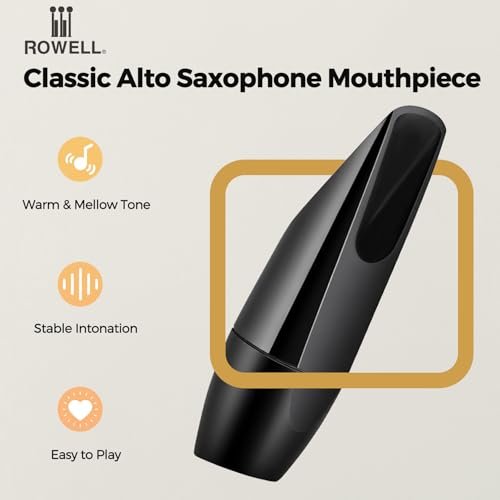
  • Classic Alto Sax Mouthpiece — Model MC1.52-01; warm, mellow tone with a precision-engineered chamber and facing curve designed for classical music, wind orchestra, and chamber ensemble playing.
  • Jazz Alto Sax Mouthpiece — Model MJ2.05-01; warm and bright tone with higher tonal versatility — the right choice for alto players splitting time between concert band and jazz ensemble.
  • Jazz Soprano Sax Mouthpiece — Model MJ1.47-01; bright and penetrating tone designed to help soprano players control the notoriously difficult upper register in jazz, pop, and funk settings.
  • Classic Soprano Sax Mouthpiece — Model MC1.06-01; warm and round tone for classical and wind orchestra playing — check soprano reed table width compatibility before ordering.
  • Jazz Tenor Sax Mouthpiece — Model MJ2.18-01; bright, full, and expressive tone built for traditional jazz, R&B, and funk — the highest-rated tenor mouthpiece in the ROWELL line at 4.1 stars across 10 reviews.
  • Classic Tenor Sax Mouthpiece — Model MC2.1-01; rich, warm, and focused tone for classical orchestra and concert band — includes a mouthpiece cap and ligature, which the other models don't all provide.
Shop on Amazon

Classic vs Jazz Sax Mouthpieces Explained

Classic and jazz mouthpieces are optimized for different sonic goals, and the difference affects how you sound, how the reed responds, and how much embouchure work the mouthpiece demands. ROWELL's saxophone mouthpiece line is organized exactly on this axis — six models split between classic and jazz across alto, tenor, and soprano. Here's what that split actually means in practical terms.

ROWELL Classic Alto Saxophone Mouthpiece Professional Sax Mouthpiece Warm Mellow Tone Concert Band Mouthpiece for Beginners S

What Makes a Mouthpiece "Classic"

Classic mouthpieces are designed for the controlled, blended tone that works in concert band, wind ensemble, and chamber settings. The chamber is typically smaller and more cylindrical, which focuses the sound and limits brightness. The facing curve — the shape of the angled surface the reed contacts — tends toward a tighter curvature with a narrower tip opening, which means less reed movement and more resistance. That resistance is the right trade-off for ensemble playing: it keeps the sound centered, reduces the tendency to spread or overblow, and helps the alto or tenor blend into the section rather than projecting over it.

ROWELL's Classic Alto Sax Mouthpiece (B0FKMJ8H55, model MC1.52-01) targets warm, mellow tone for classical music, wind orchestra, and chamber contexts. The Classic Tenor Sax Mouthpiece (B0FKMXFYJD, model MC2.1-01) is described as producing a "rich, warm, focused" tone — the kind that blends into orchestral texture without sticking out. The Classic Tenor is the only model in the ROWELL line that includes both a mouthpiece cap and a ligature in the box, which makes it more complete out of the packaging. The Classic Soprano (B0FKMV8789, model MC1.06-01) rounds out the classical line with a warm, round tone suited to concert and chamber soprano playing.

What Makes a Mouthpiece "Jazz"

Jazz mouthpieces prioritize projection, brightness, and flexibility over blending. The chamber is typically larger and more curved — sometimes called an "expanded" or "high baffle" design — which increases reflections inside the mouthpiece and pushes the tone toward brightness and edge. The tip opening is wider, meaning the reed has more room to vibrate. More reed movement produces more volume, more overtone complexity, and more sensitivity to embouchure changes — which is exactly what jazz improvisation demands. You can shape your sound by adjusting air pressure and lip position in real time.

The Jazz Alto Sax Mouthpiece (B0FKN2P5SK, model MJ2.05-01) delivers a warm-bright tone suited to jazz and pop alto playing. "Warm-bright" is a real category — it has more projection and openness than a classic piece, but it's not as aggressive as a full-baffle metal jazz mouthpiece from a specialist brand. The Jazz Tenor (B0FKMTB5L8, model MJ2.18-01) produces a "bright, full, expressive" tone specifically designed for traditional jazz, R&B, and funk — it's the most popular mouthpiece in the ROWELL sax line, currently ranked #10 in Tenor Saxophones Mouthpieces on Amazon. The Jazz Soprano (B0FKMXYG7N, model MJ1.47-01) targets modern jazz, pop, and funk soprano playing with a bright, penetrating character.

Which Do You Need — One or Two?

This is the real question for a student playing in both concert band and jazz ensemble. Technically, you can use a jazz mouthpiece in a concert band setting — but it requires more embouchure control to keep the sound focused, and you'll work harder to blend. A classic mouthpiece in a jazz setting will sound controlled and understated, which works for some jazz styles but limits your ability to project and cut through a rhythm section. If you're serious about both settings, two mouthpieces is the right answer. It's not a luxury — it's the same principle as having a different bow grip for orchestral versus chamber playing.

If you can only choose one: players spending most of their time in concert band should go classic. Players doing primarily jazz or commercial playing should go jazz. Players doing both equally should lean jazz, because a jazz mouthpiece is more forgiving in terms of volume range than a classic piece is in terms of flexibility.

The Soprano Reed Fit Issue — Read Before Buying

Buyers of the Classic Soprano Mouthpiece (B0FKMV8789, model MC1.06-01) have reported a reed table width compatibility concern: some soprano reeds from major manufacturers don't seat cleanly on the table because the table width is narrower than their reed width. This isn't a defect in the mouthpiece itself — it's a sizing compatibility issue. Before purchasing, verify that the soprano reeds you plan to use are compatible with a 1.06 table width. Strength 3 soprano reeds are a reliable starting point. If you're already using a specific soprano reed brand and size, check compatibility before ordering rather than after.

The Jazz Soprano (B0FKMXYG7N) has not shown the same compatibility concern in available reviews — the 1.47 model designation indicates a different facing and table geometry. But if soprano reed compatibility is a concern for your specific reed brand, check the model number (MC1.06-01 vs. MJ1.47-01) before deciding which soprano mouthpiece to buy.

brass instrument accessory

Mutes, Mouthpieces, and Guards for Brass Players

ROWELL's brass instrument accessory line serves three distinct functions: volume reduction for apartment practice (the ABS straight trumpet mutes), tone and intonation control (the 7C trumpet mouthpiece and 67C4 tuba mouthpiece), and instrument protection (the leather trumpet valve guard and cowhide French horn guard). The two trumpet mutes are identical in spec across their silver and black colorways — ABS construction, three cork strips for a secure bell fit, flannel interface for airtightness, and 5.7 × 2.95 × 2.95-inch dimensions. Both mouthpieces are silver-plated brass with brass ring engraving and fit most standard instruments within their respective size ranges.

What to look for

  • Mute vs. mouthpiece — a practice mute reduces volume 30–40% for quiet practice; a replacement mouthpiece changes your tone and response permanently; don't conflate the two purchases
  • Mute pitch effect — ABS straight mutes typically sharpen the instrument's pitch; plan to adjust your tuning slide when switching to muted practice, especially if you're recording or playing along with tracks
  • Mouthpiece sizing — the 7C trumpet mouthpiece (3.54 inches high, 0.4-inch insert, 1.06-inch outer diameter) fits most standard Bb trumpets; the 67C4 tuba mouthpiece (3.74 inches high, 0.51-inch insert, 1.89-inch outer diameter) fits most standard tubas — verify bell shank diameter before ordering
  • Guard material — the trumpet valve guard uses high-quality leather with a paste design; the French horn guard uses cowhide with a three-paste closure and non-slip backing that redistributes instrument weight to the back of the hand during long performances

In this category

  • Straight Trumpet Mute Silver — ABS construction with three cork strips and flannel interface; reduces playing volume 30–40% for neighbor-friendly practice — 98 verified reviews at 4.0 stars, the highest review count in the brass accessory line.
  • Straight Trumpet Mute Black — Identical specs to the silver mute (5.7 × 2.95 × 2.95 inches, three cork strips, flannel interface) in a black finish for players who want a less conspicuous stage accessory.
  • 67C4 Tuba Mouthpiece Silver — Silver-plated brass with brass ring engraving; 3.74 inches high, 0.51-inch insert diameter, 1.89-inch outer diameter — fits most standard tubas; 4.5 stars across 41 reviews.
  • 7C Trumpet Mouthpiece Silver — The industry-standard beginner size in silver-plated brass with brass ring engraving; 3.54 inches high, 0.4-inch insert, 1.06-inch outer diameter — a direct replacement for the 7C included with every ROWELL trumpet set.
  • Leather Trumpet Valve Guard — High-quality leather with paste-on design protects the valve section from hand sweat, oil stains, and daily handling scratches — 4.6 stars across 27 reviews, the highest-rated accessory in this category.
  • Cowhide French Horn Guard — Cowhide construction with ergonomic three-paste design that transfers instrument weight from the fingers to the back of the hand — practical for any French horn player dealing with fatigue during extended rehearsals.

Using Trumpet Mutes Without Wrecking Your Intonation

A straight mute sharpens your trumpet's intonation. Every trumpet player who uses one needs to know this and compensate for it — because if you don't, you'll practice in tune with the mute and sound sharp without it. The fix takes five seconds and becomes automatic. Here's exactly what's happening and what to do about it.

Why Mutes Sharp the Instrument

A straight mute inserted into the trumpet bell changes the acoustic length of the air column. The cork strips that secure the mute — ROWELL's ABS straight mutes use three of them — don't create a perfect seal. They allow controlled airflow while reflecting some air back into the tubing. That reflected air effectively shortens the resonant column, which raises the pitch. The effect is consistent across most straight mutes: expect the instrument to run approximately 15–30 cents sharp with a mute in place, depending on how firmly the mute seats and how your bell diameter fits the cork strips.

ROWELL Trumpet Mute

This is not a defect. It's physics, and it's the same on Denis Wick, Humes & Berg, and every other straight mute on the market. The ROWELL ABS Straight Trumpet Mute (B0CG8QYG1P in silver, B0CG8L7VQN in black) follows the same acoustic behavior — the 5.7 × 2.95 × 2.95-inch ABS body with flannel interface and three cork strips behaves identically to any comparable straight mute in this category.

The Simple Fix

Before inserting the mute, push your main tuning slide in slightly — typically 1/4 to 1/2 inch, depending on how sharp your specific mute runs. Play a written concert A (open G on Bb trumpet) with a tuner or drone reference, and adjust until your pitch is centered. Mark or memorize where your slide sits with the mute in versus without it. After a week of practice, the adjustment becomes automatic and takes about three seconds to make.

Some players prefer to use a clip-on tuner during muted practice as a reference check. That's a good habit regardless of mute use — it trains pitch awareness rather than just relying on the slide to compensate.

When to Use a Practice Mute

ROWELL's straight mute reduces volume by 30–40%. That's a real, meaningful reduction — enough that a player in an apartment building won't disturb neighbors in adjacent units during a normal practice session. It's not the near-silence of an electronic practice mute, but it makes Bb trumpet practice viable in shared living situations.

Use it for: scales, long tones, technical exercises, and repertoire where pitch accuracy and finger technique are the goal. Avoid it for: embouchure development work, tone-building exercises, and sight-reading sessions where you need to hear your natural sound. Muted practice feels and sounds different enough that it can subtly distort your sense of what the instrument's natural response feels like. Mixing muted and unmuted practice in the same session — rather than exclusively practicing with the mute — keeps both skills calibrated.

What the Cork Strips Actually Do

The three-cork-strip design on ROWELL's mute serves two functions. First, it holds the mute securely in the bell without rattling — a mute that vibrates against the bell creates buzz that muddies the tone. Second, the gaps between the cork strips allow airflow past the mute body. That airflow is what makes the tone still usable rather than completely choked. A fully sealed mute (no airflow) produces a harsh, strangled sound that makes it impossible to work on tone quality; the three-strip design preserves enough of the instrument's acoustic character to make practice meaningful.

The flannel interface on the inside of the mute's head adds a layer of friction and vibration dampening where the mute body contacts the bell interior. This protects the bell's lacquer or silver finish from scratching — an important detail if you're using the mute on a trumpet you care about maintaining.

ABS vs Fiber Mutes — a Brief Note

ROWELL's straight mutes are ABS plastic. Traditional straight mutes from Humes & Berg and Stone Lined use a different internal construction — a fiber or stone-lined body that some players feel produces a slightly warmer, less pinched tone at the extremes of the dynamic range. ABS mutes are more consistent in construction, lighter, and less expensive. For practice purposes — scales, etudes, technical work at home — the tonal difference between ABS and fiber is not meaningful. For recording or performance settings where tone character under the mute actually matters, fiber mutes are worth exploring. But for what practice mutes are actually used for, ABS performs the function.

trombone accessory

5 Trombone Accessories That Cover the Basics

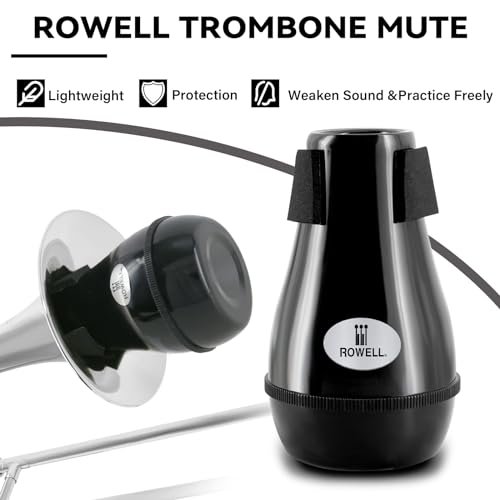
ROWELL's trombone accessory line addresses the four most common purchases for new and working trombone players: practice mutes for apartment-volume rehearsal, mouthpiece upgrades for small and large bore instruments, and a leather guard set that protects the neck pipe from sweat damage. The two ABS mutes are #1 in Trombone Mutes on Amazon — their 5.19-inch body with 1.67-inch head interface fits standard trombone bells, and the high-density sponge interface seats without the cork strips used on trumpet mutes. The 51D and 12C mouthpieces cover different bore sizes: the 51D targets standard large bore Bb trombone, while the smaller 12C serves small bore and alto trombone players.

What to look for

  • Mute fit — the ROWELL trombone mute uses a sponge interface (1.67-inch head) rather than cork strips; it works in most standard trombone bells, but bell diameter varies between manufacturers, so check your instrument's bell size if you have a non-standard horn
  • Mouthpiece bore match — the 51D (1.57-inch outer diameter, 0.4-inch insert) is designed for standard Bb trombone; the 12C (35mm outer, 25.1mm inner ring, 13mm insert) fits small bore trombone and alto trombone — don't use the 51D in a small bore instrument
  • Guard set coverage — the three-piece guard set includes a 6.85-inch neck guard and two finger guards (4.72 inch and 3.93 inch); the paste design attaches without tools and won't damage the lacquer finish
  • Mute volume reduction — like the trumpet mutes, the trombone ABS mute reduces playing volume 30–40%, which is enough to keep apartment neighbors comfortable but not enough for complete silence; the mute also affects pitch slightly, so tune the slide after installing it

In this category

  • ABS Trombone Mute Black — #1 in Trombone Mutes on Amazon; 5.19-inch ABS body with 1.67-inch high-density sponge head interface, reduces volume 30–40% for practice — 73 verified reviews at 3.8 stars.
  • ABS Trombone Mute Silver — Identical specs to the black mute in a silver finish; same 5.19-inch body, same sponge interface, same 3.8-star rating across 73 reviews — choose by visual preference only.
  • 51D Trombone Mouthpiece Silver — Silver-plated brass with brass ring engraving; 3.15 inches high, 0.4-inch insert, 1.57-inch outer diameter — designed for standard Bb trombone and rated 4.5 stars across 42 reviews.
  • 12C Alto Trombone Mouthpiece — Inner ring 25.1mm, outer ring 35mm, insert 13mm; designed specifically for small bore trombone and alto trombone players who need a smaller shank than the standard 51D provides.
  • Leather Trombone Guard Set — Three-piece leather set: 6.85-inch neck guard and two finger guards (4.72 and 3.93 inches); paste design attaches without tools and protects the neck pipe from sweat corrosion during long sessions or performance — 4.1 stars across 21 reviews.

First Year Trombone Gear Priorities

New trombone players — and the parents buying gear for them — consistently ask the same question: what do you actually need from day one, and what can wait? The trombone is mechanically different from valve instruments. The slide is the entire mechanism, and it's vulnerable in ways pistons aren't. That shapes which accessories matter immediately and which are genuinely optional.

Day One — Protect the Slide

The trombone neck pipe and hand slide are the two contact points where sweat, skin oils, and friction cause damage over time. For a brand-new student, a guard set is the most practical first purchase — not because the trombone is fragile, but because student players handle the instrument more clumsily than they realize while they're still developing muscle memory for the slide positions.

The ROWELL Trombone Guard Set (B0D6QJV1TX) covers both contact points: a 6.85-inch neck guard for the neck pipe, plus two finger guards (4.72 inches and 3.93 inches) for the hand positions. All three pieces use a paste attachment design — no adhesive, no tools, easy to reposition if needed. The leather surface prevents sweat penetration and keeps skin oils off the brass surface. For a student whose instrument will go in and out of a case daily, this is the item that most extends the instrument's condition over a school year.

ROWELL Trombone Mute ABS Trombone Mutes Silencer Lightweight Black Trombone Mute Trombone Mutes with High Density Sponge Inte

Slide cream or slide oil is also a day-one item, but it typically comes from the band director or music store with the instrument. If it didn't, any standard trombone slide lubricant works — Slide-O-Mix, Yamaha Slide Lubricant, and Superslick are widely available. The slide should move freely and silently. If it catches or feels sticky, that's a lubrication issue, not a defect.

Year One — Mouthpiece Upgrade Path

The trombone mouthpiece included with most student instruments is a starting point, not a permanent solution. The two ROWELL mouthpiece options serve different trombones, and the distinction matters: the 12C Trombone Mouthpiece (B0CNJX2YGM) fits small-bore and alto trombones, while the 51D Trombone Mouthpiece (B0DLMGDKWN) fits standard Bb trombone.

The 12C has an inner ring diameter of 25.1 mm and a 13 mm insert diameter — sized for small-bore instruments where the shank is narrower. The 51D runs larger: 3.15 inches high, 0.4-inch insert diameter, 1.57-inch outer diameter. It's appropriate for most standard Bb trombones in school band programs. Both use silver-plated brass with the brass ring engraving that's consistent across ROWELL's mouthpiece line.

The 51D is the more commonly purchased mouthpiece (4.5 stars from 42 reviews, ranked #20 in Trombone Mouthpieces on Amazon). Most beginning trombone students in concert band programs are playing standard Bb trombone, not small-bore or alto, so the 51D is the default recommendation unless you know the instrument is a small-bore or alto configuration. Check the instrument's slide bore size before ordering — most school-issue Bb trombones are .500- or .508-inch bore, which the 51D shank accommodates.

Year One — Practice Mute for Apartment Players

If the student is practicing in shared living space, a practice mute becomes relevant in the first few months. The ROWELL ABS Trombone Mutes (B0CZL7VZ9S in black, B0CZL9699B in silver) reduce volume by 30–40% via a high-density sponge interface that seats in the bell. The 5.19-inch mute body and 1.67-inch head interface are designed for standard Bb trombone bells — verify your bell diameter accommodates this before purchasing.

The sponge interface design is worth understanding: unlike cork-strip trumpet mutes, the trombone mute seats on a three-point sponge contact, which allows airflow while dampening volume. This is why ROWELL's trombone mute holds the #1 position in Trombone Mutes on Amazon despite its 3.8-star rating — it does the functional job of volume reduction at an accessible entry point. Verified buyer concerns in the reviews center on tone quality rather than function: some players find the muted tone more constrained than they'd like for longer practice sessions. That's a characteristic of ABS straight mutes generally, not a specific defect.

Like trumpet mutes, trombone straight mutes affect intonation — typically sharpening the instrument by a similar margin. Adjust the tuning slide slightly when the mute goes in, and restore it when the mute comes out.

What Can Wait

A cleaning kit — snake brush, slide cleaning rod, polishing cloth — is useful but not urgent in the first month. Band directors typically cover instrument cleaning in early lessons. The ROWELL 67C4 Tuba Mouthpiece (B0DLMMDK9C) in the brass accessory line is not relevant to trombone — don't confuse it with trombone mouthpieces when browsing. A cup mute, harmon mute, or bucket mute are performance-context items for players who've been playing for at least a year and are doing jazz ensemble or solo work. Skip them until they're actually needed.

  • Day one: Trombone Guard Set (B0D6QJV1TX) — neck guard + 2 finger guards, leather, paste design
  • Day one: Slide lubricant (if not included with instrument)
  • Months 1–3: Evaluate mouthpiece — 51D (B0DLMGDKWN) for standard Bb trombone, 12C (B0CNJX2YGM) for small-bore or alto
  • Months 1–6 if needed: Practice mute for shared living — ABS Trombone Mute (B0CZL7VZ9S or B0CZL9699B)
  • Not yet: Specialty mutes, cleaning kits beyond basic slide care, specialized performance accessories

Verified Buyers Share What's Working — and What's Not

"I've gone through three cheap thrones in the last five years — foam that bottoms out, tripod bases that wobble mid-fill. The Round Padded Throne Standard has held up for about eight months of weekly rehearsals so far, and the 11.8-inch surface is wide enough that I'm not fighting for seat space after an hour. My one gripe: the height cap at 21.7 inches is tight for taller players. But for the money, it's the most stable I've had at this end of the market."
— Marcus D., Working Drummer on a Budget, on Drum Throne
"Bought the Hydraulic Throne Backrest 4-Leg after my old hydraulic kept drifting down during long sessions. The four-leg base is noticeably more stable than the tripod hydraulics I've tried — it doesn't bounce when I'm playing hard. The backrest took some adjustment to angle right, and the height range topping out at 36.6 inches works for me. SGS and TUV certified, which mattered to me. Would buy again."
— Renee T., Amateur Drummer with a Home Studio, on Drum Throne
"My son is in 7th-grade concert band and needed a Bb trumpet that could actually hold intonation through beginner exercises. The Student Bb Trumpet Gold has done exactly that — nothing we've noticed is egregiously sharp or flat in the lower two registers. The 7C mouthpiece included is a fine starting point. Hard case is solid. He's six months in and the valves are still snapping back cleanly."
— Patricia H., Parent Buying for a First-Year Band Student, on Trumpet
"I came back to alto sax after about twelve years and grabbed the Jazz Alto Sax Mouthpiece to replace the stock piece on my old horn. The brighter attack it produces is genuinely noticeable — it does what a jazz mouthpiece should do. Rating is three stars down from five only because the ligature needed some patience to seat consistently. Once it locked in, the response was what I was looking for."
— Jerome K., Adult Returner Getting Back into Jazz Ensemble, on Saxophone Mouthpiece
"We're a small school program and needed mouthpieces and guards for the trombone section without spending a lot per student. The 51D Trombone Mouthpiece Silver sounds noticeably cleaner than the stock pieces our rentals shipped with — good intonation, comfortable rim. The Leather Trombone Guard Set has held up to daily student handling, which is the real test. The neck guard is 6.85 inches and fits our school Yamahas and the Bach rentals without any fitting issues."
— Sandra M., Middle School Band Director, on Trombone Accessory
"Ordered the Blackwood Clarinet 18 Key Eb/Ab for my daughter who's been on ABS for two years and was ready to step up. The tonal difference from her old resin body is real — warmer in the middle register, more resonance overall. Italian sheepskin pads sealed cleanly right out of the box. She's been using it in Symphonic Band and it's held intonation well. Only thing to note: budget time for a proper setup from a tech. Arrived playable but a pad was slightly off."
— David C., Parent Buying for an Advancing Student Clarinetist, on Clarinet

Common Questions About ROWELL Instruments and Accessories

Does a drum throne actually make a difference for posture and endurance?

Yes — significantly. The seat height, foam density, and base stability all affect how your weight distributes during a session. ROWELL's Round Padded Throne Standard uses 8 cm of high-density sponge across an 11.8-inch surface specifically to prevent the foam compression that causes hip and back fatigue after 60-plus minutes. A throne that sags or wobbles forces constant micro-adjustments. That compounds over a two-hour rehearsal.

How long should a drum throne last with regular use?

A well-built throne with high-density foam should last three to five years of regular gigging or rehearsal use. Budget thrones using lower-density padding typically bottom out — losing their support feel — within the first year. ROWELL's motorcycle-style and hydraulic thrones use the same high-density sponge spec as the standard model, which is the key durability variable to check regardless of brand.

Is ROWELL a good trumpet brand for students?

ROWELL sits in the student-to-intermediate tier — it isn't competing with Bach Stradivarius or Yamaha's professional line, and it doesn't claim to. What the ROWELL Bb trumpet line delivers at this level is solid brass construction, stainless steel pistons that return cleanly, and a 7C mouthpiece included in every set. For a first-year student or an adult returning after a long break, that's a workable starting point. Players with serious audition goals should expect to upgrade within two to three years.

Do trumpet mutes affect pitch when you practice?

Yes. Straight practice mutes — including the ROWELL ABS Straight Trumpet Mute — typically sharpen the instrument's pitch. Students should adjust the tuning slide when switching to mute and check their intonation against a tuner rather than assuming the horn is in tune. The ROWELL mute reduces volume 30–40% and uses three cork strips for airflow. It won't silence the instrument; neighbors one room away will still hear you playing.

What is the difference between a classic and jazz saxophone mouthpiece?

Classic mouthpieces — like ROWELL's MC1.52 alto and MC2.1 tenor — are designed for warm, focused, controlled tone that blends into concert band and chamber settings without cutting through. Jazz mouthpieces, like the MJ2.05 alto and MJ2.18 tenor, open up the tone for projection and expressiveness in big band and combo contexts. The difference is real and audible. Players doubling in concert band and jazz band often benefit from having one of each.

Which ROWELL saxophone mouthpiece fits soprano sax?

ROWELL makes two soprano mouthpieces — the Classic Soprano Sax Mouthpiece (model MC1.06-01) for concert and chamber settings and the Jazz Soprano Sax Mouthpiece (model MJ1.47-01) for jazz, pop, and funk. One confirmed buyer note on the classic soprano model: verify that your soprano reeds match the table width before ordering. Some soprano reed brands run narrower than the MC1.06 table and won't seat cleanly. Strength 3 reeds are the minimum recommendation.

What trombone accessories do beginning players actually need first?

According to trombone teachers and parent threads on r/Trombone, two items matter most in the first year: a guard set to protect the neck pipe from hand sweat (ROWELL's Leather Trombone Guard Set includes a 6.85-inch neck guard plus two finger guards), and consistent slide care. A practice mute is useful if apartment living is a constraint. A mouthpiece upgrade is a second-year consideration — the stock mouthpiece from most beginner rentals is adequate for building basic technique.

What is the difference between the ROWELL 51D and 12C trombone mouthpieces?

The 51D Trombone Mouthpiece Silver (3.15 inches high, 0.4-inch insert, 1.57-inch outer diameter) is sized for standard large-bore Bb trombone — the instrument most concert band and jazz players use. The 12C Trombone Mouthpiece Silver (inner ring 25.1 mm, outer 35 mm, insert 13 mm) is built for small bore trombones and alto trombone. Putting the wrong mouthpiece on the wrong instrument affects response and intonation. Match the mouthpiece to your instrument's bore specification before ordering.

Is the ROWELL ABS clarinet body adequate for learning on?

For students in the first two years of learning, yes. The ABS composite body on ROWELL's 17-key standard clarinet doesn't crack in dry weather or a cold car the way wood can, and the complex bore design keeps intonation reasonably stable across the registers. The r/Clarinet community is vocally skeptical of ABS instruments generally, and that skepticism is legitimate for very cheap, inconsistent construction — but it's less applicable at the level ROWELL's ABS model is built to. Players advancing toward auditions should consider stepping up to the African blackwood body after year two.

What does the Eb/Ab lever on the ROWELL 18-key clarinet actually do?

The Eb/Ab lever gives players an alternate fingering path for those two pitches — useful in passages where the standard fingering creates awkward hand position shifts. It's a feature found on professional and advanced-student clarinets, not beginner models. ROWELL's Blackwood Clarinet 18 Key Eb/Ab is the only model in the line that includes it, which makes it the right choice for players who are already comfortable with standard technique and want to expand their fingering options in challenging repertoire.

How does the ROWELL 4-valve euphonium's fourth valve work?

On the ROWELL 4-Valve Euphonium Lacquer Gold, the fourth valve lowers the pitch a perfect fourth (five half-steps), extending the instrument's range into the pedal register. Players use it in combination with other valves to access notes — like low B-natural — that would otherwise require extreme slide adjustment on a three-valve instrument. It also provides alternate valve combinations for better intonation on certain pitches that are inherently sharp on three-valve configurations.

What accessories come included with ROWELL trumpet sets?

Every ROWELL trumpet set ships with a hard case, silver-plated 7C mouthpiece, and white gloves. The Brushed Finish Bb Trumpet Gold and Student Bb Trumpet Gold both include a trumpet stand as well. The Nickel Black Bb Trumpet includes a cleaning cloth. No set requires a separate mouthpiece or case purchase before the first practice session — that's one of the consistent advantages across all four models in the trumpet line.

One Brand Across the Full Concert Band Spectrum

ROWELL built its instrument line around a specific gap in the market — not the professional tier where Bach, Yamaha, and DW compete, and not the throwaway end where build quality falls apart within months. The brand's strongest early foothold came through drum thrones and trumpets: products where buyers could verify specs directly (seat width, foam density, valve material) rather than relying on brand reputation alone. That approach — spec transparency instead of prestige claims — became the thread running through everything that followed.

From percussion hardware, the line expanded into the full concert band instrument range. Trumpet gave way to clarinet, then euphonium and baritone horn, then French horn. The trombone accessory line — mutes, mouthpieces, and the three-piece leather guard set — developed alongside the brass instrument accessory line covering trumpet mutes, the 7C and 67C4 mouthpieces, and valve guards for both trumpet and French horn. Each line addresses the same type of buyer: someone who knows what they're looking for, has done at least preliminary research, and wants honest build quality without a professional-tier price commitment. The saxophone mouthpiece line, which now covers six models split across classic and jazz styles for alto, tenor, and soprano, extends that logic into woodwind accessories — a category where the established brands charge substantially more and community discussions consistently surface the question of whether the premium is justified at the student and intermediate level.

Across drum thrones, trumpets, clarinets, euphoniums, saxophone mouthpieces, brass instrument accessories, and trombone accessories, the consistent throughline is measurement-first product design. Weight capacities are rated and certified — the hydraulic throne line carries SGS and TUV certification. Seat dimensions and height ranges are specified rather than approximated. Mouthpiece tolerances are published. None of that replaces the question of whether a product is right for your specific situation, which is what the content on this site is designed to help you answer. But it's the foundation that makes the answer honest.

A Real Drummer Puts This Throne to Work

We picked this review because Emilio actually plays through it — you're not watching a spec rundown, you're watching someone sit down, set up, and put the throne through real drumming conditions. That matters more than any bullet point we could write. Watch to see how the motorcycle-style seat holds up under extended playing, and whether the height adjustment stays locked once you're mid-session.

Useful Guides

Daniel answers the questions every musician asks before buying—what costs what, what fits what, and whether it's actually worth it.

About ROWELL Music

ROWELL is a multi-line band instrument brand covering drum thrones, Bb trumpets, clarinets, euphoniums, saxophone mouthpieces, brass instrument accessories, and trombone accessories. The full product range is available through the ROWELL storefront on Amazon.com, where you can browse all seven categories and check current availability across models and finishes.

Customer Support and Order Questions

For questions about specific orders, shipping timelines, or delivery issues, Amazon customer service handles all post-purchase support for ROWELL products sold through Amazon.com. Use the "Orders" section of your Amazon account to initiate returns, exchanges, or contact the seller directly through the Amazon messaging system.

Warranty and Returns

ROWELL products sold on Amazon include a one-year warranty as listed on applicable product pages. Warranty claims and return requests are processed through Amazon's standard return process. Check the specific product listing for warranty terms before purchasing, as coverage details may vary by product category.